

Kharkiv,
Gromadyanska St., 11/13
29 April 2026
Twenty years ago, the growth of tech companies depended heavily on the local labor market. Engineers were hired within the same city or country, and scaling a team was often limited by how many specialists were available nearby.
Today, the situation is fundamentally different. The global IT outstaffing market is approaching $700-800 billion. According to IDC estimates from a few years ago, the global shortage of developers was expected to reach around 4 million specialists by 2025 — and those projections have proven accurate.
As of 2026, most studies agree that the shortage of technical talent is not decreasing: over 70–80% of companies worldwide report difficulties hiring IT specialists, while the global skills gap continues to grow and may reach an average of 40% by 2027.
What is IT outstaffing?
IT outstaffing (Staff augmentation) is a collaboration model in which a company hires engineers through a technology partner, but they work as part of the company’s internal team. These specialists handle all tasks aimed at achieving the client’s goals: product development, solution implementation, support, and feature enhancement alongside internal teams.
For businesses, this creates several advantages:
- the ability to quickly find engineers, even if they are unavailable locally — global remote hiring expands the talent pool by more than 30%;
- cost savings of up to 30% on office space and relocation;
- platforms and technology partners help reduce hiring time by 40-70%.
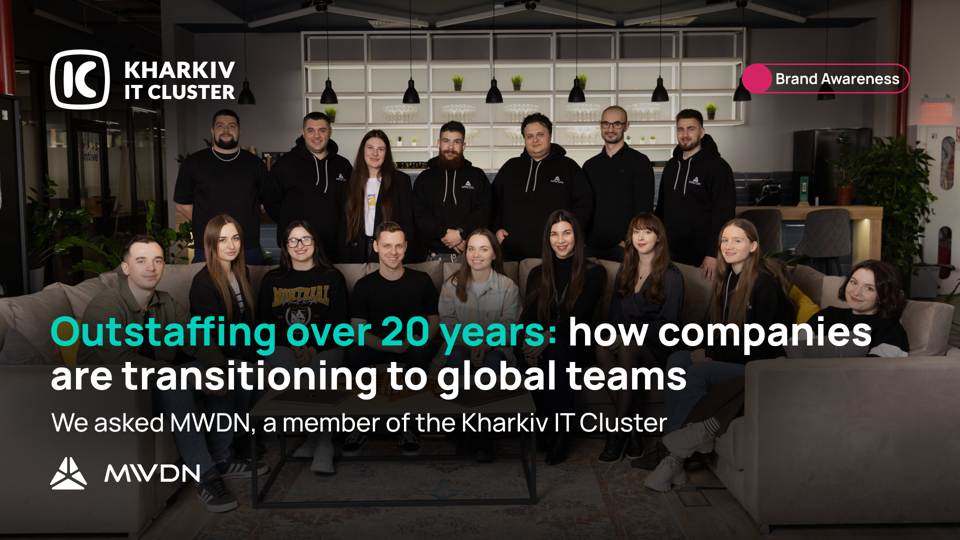
To better understand how this model works today and why it remains relevant, we spoke with the team from Kharkiv IT Cluster community member MWDN — an international IT company that has been helping tech businesses build engineering teams and scale development through outstaffing for over 20 years.
According to their experience, this model significantly accelerates hiring: engineering roles are filled 2-3 times faster than with traditional local recruitment, and the first candidates are usually presented within 1-3 days. At the same time, teams remain stable — engineers often stay on projects for years, with an average duration of 5 years.
Headhunting vs outstaffing: which is more effective?
As MWDN explains, the difference between headhunting and outstaffing goes beyond cost or hiring process. Headhunting (IT recruiting) is an alternative hiring approach: a recruiter finds a candidate, the company pays a fee (often 20–30% of the annual salary), and all further processes — from onboarding to retention — remain the employer’s responsibility.
Outstaffing works differently: engineers become part of the client’s team, while all operational processes — recruiting, HR, legal matters, payroll, and support — are handled by the partner. This model allows companies to scale teams faster and maintain a consistent development pace.
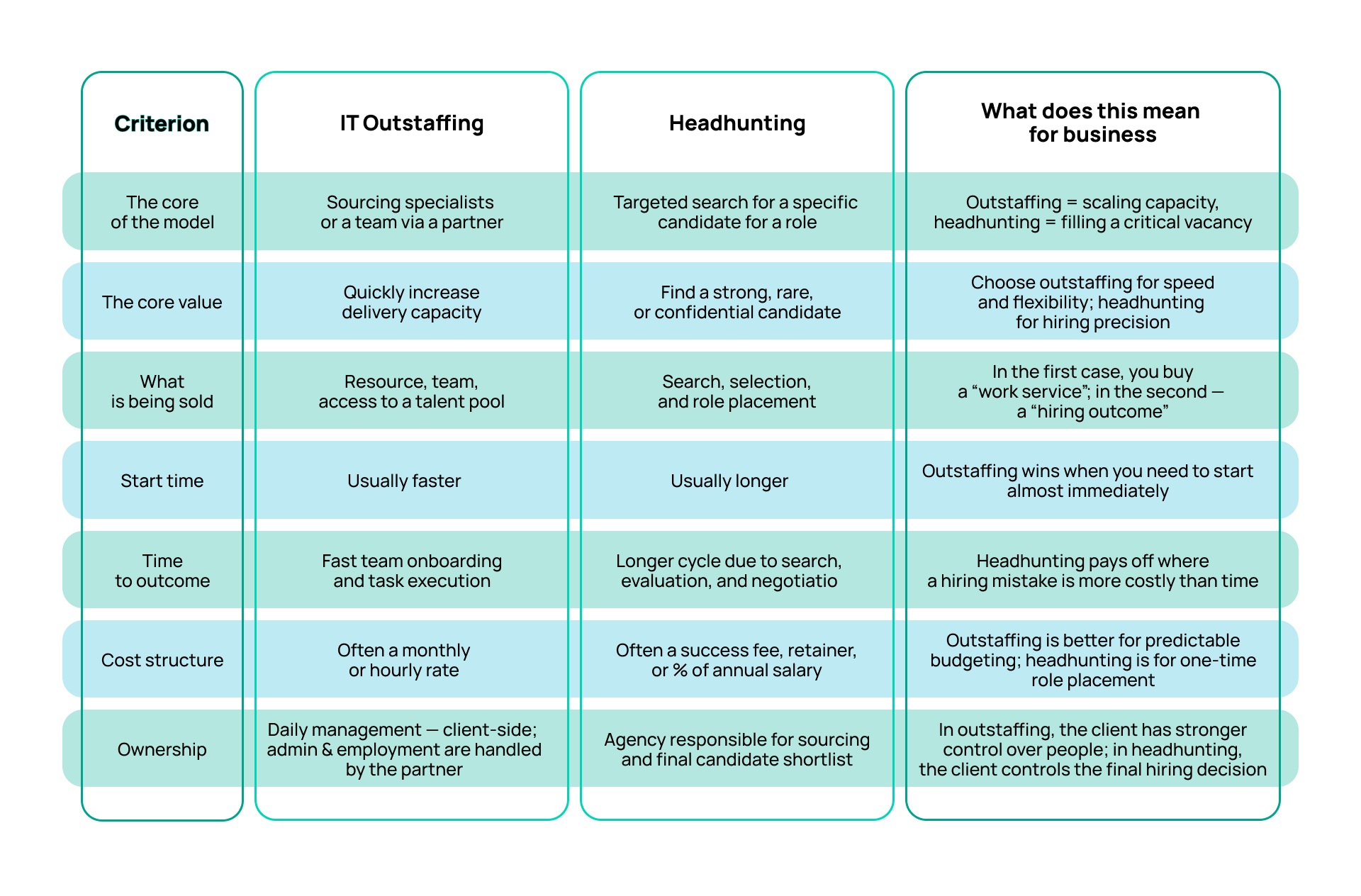
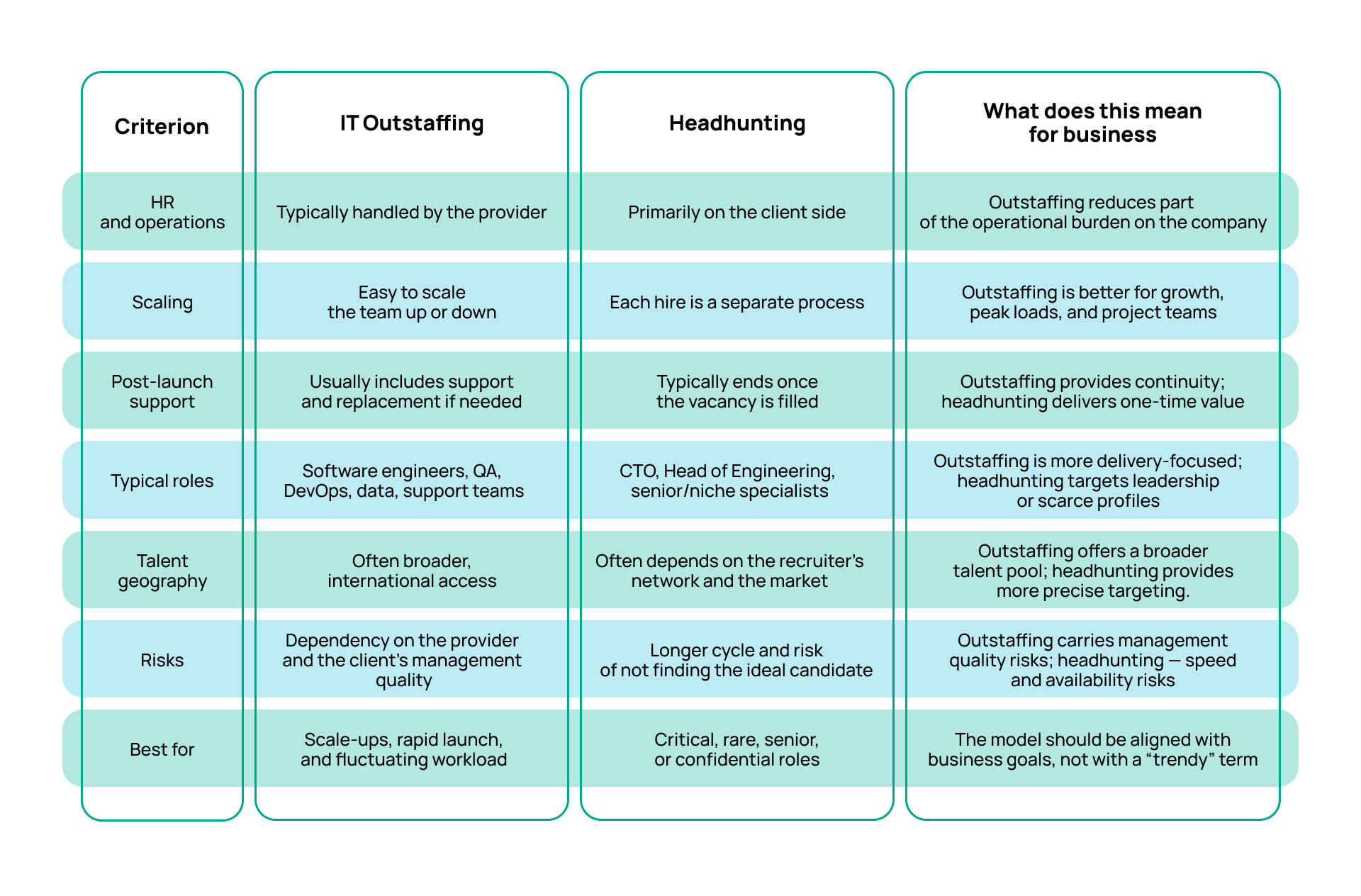
For companies planning to hire not just one but 5-10 new roles per year, outstaffing often proves more cost-effective: one-time hiring costs decrease, and the time it takes for specialists to reach full productivity is reduced.
Myths and reality of remote-first teams
Despite the rapid expansion of remote work, many myths still surround remote-first teams. One of them is that outstaffing is gradually losing relevance, as companies increasingly seek highly specialized partners or alternative collaboration models.
In practice, however, the situation looks different. The outstaffing market continues to grow steadily: by the mid-2020s, it is already approaching $700-800 billion and is projected to double by the early 2030s.
According to global research, about half of office workers worldwide now work in a hybrid format, while fully remote work has stabilized at 15-25% of working days — significantly higher than before the pandemic.
This aligns with broader global trends: despite market turbulence, demand for experienced remote teams continues to grow, especially in complex domains such as fintech, healthtech, ad-tech, AI, and cybersecurity.
Companies increasingly evaluate experience, reputation, and real case studies before starting cooperation, and tend to choose partners who:
- have been on the market for many years
- have a stable reputation
- demonstrate real results
This is also confirmed by MWDN’s data. In 2025 alone, the company attracted 27 new clients from different parts of the world, indicating stable demand for outstaffing models. At the same time, the number of вакансій clients delegate for hiring continues to grow.
The most common business requests today include:
- scaling engineering teams
- strengthening R&D departments
- hiring senior engineers for complex technological products
- filling niche roles such as AI Solutions Architect, Prompt / LLM Engineer, and AI Automation Engineer
At the same time, a successful partnership often goes beyond the traditional service model. In many cases, engineers working in an outstaffing model often become a fully integrated part of the client’s team.
MWDN shared feedback from the EVP & Head of Engineering of Capitolis (Israel): “Engineers who worked with us effectively became part of our team and made a significant contribution to our success.”
Control without micromanagement: how remote team efficiency is measured
Another common stereotype is that remote work requires constant control. However, distributed teams operate differently. Efficiency is measured not by monitoring processes, but by results and execution speed.
In the outstaffing model, technical management always remains on the client’s side. Engineers work within the client’s infrastructure, and access to code and internal systems is regulated by NDA agreements. The service company does not interfere in the internal workflow. Instead, the focus shifts to operational efficiency of collaboration.
At MWDN, this is measured through several key indicators:
- the first 4-5 pre-vetted candidates are delivered within 1-3 days
- focus on the top 5% of tech specialists and daily work with 600+ candidates
- fast response to any changes, from replacing an engineer to scaling the team
- transparent communication with no delays or lost messages
- operational processes that enable quick project kickoff
For example, among MWDN’s clients is Carbonatix, an international ad-tech platform developing technologies for digital audio and video advertising and helping brands work with programmatic advertising.
Carbonatix notes that the collaboration significantly strengthened their team: efficiency and deli very speed increased by 40%, thanks to faster feature delivery and a stable team throughout the partnership.
How are client expectations changing?
As the market evolves, so do client expectations. Today, companies choose partners more carefully, evaluating experience, processes, and the ability to fill complex engineering roles.
In fact, this has become a kind of market filter. Companies without real outstaffing experience gradually lose competitiveness, while demand grows for partners with strong recruitment capabilities and well-established processes.
At MWDN, one important step in their development was the creation of a dedicated talent sourcing department focused on finding engineers for specific client needs.
The company works with a pool of over 200,000 pre-vetted candidates that is constantly expanding. At the same time, the team conducts individual searches for complex or rare roles — such as AI/ML engineers, blockchain developers, high-load backend specialists, senior DevOps engineers, and cloud architects. Approximately 90% of the pool consists of senior-level specialists.
In 2025, MWDN reached its largest scale in history (182 specialists), significantly increased its retention rate (+32%), signed 27 new contracts in cybersecurity, SaaS, fintech, product, and AI sectors, and expanded geographically by launching a fully operational region in South America.
According to MWDN Managing Partner Vitalii Vystavnyi, it is important not only to find the right engineers but also to ensure their full integration into the client’s team:
“In our case, exclusivity of cooperation is ensured through a combination of structural, operational, and day-to-day control processes. It’s not just about trust. Engineers work full-time and, under contract, cannot collaborate with other companies simultaneously. They work directly with the client — within their environment and workflows.” — Vitalii Vystavnyi, Managing Partner, MWDN
What’s next: the future of outstaffing in 2026
Among the key trends for 2026, MWDN highlights:
- Outstaffing is transforming into a delivery partnership, where engineering teams act as an extension of the client’s organization
- AI is becoming a fundamental development tool, reshaping hiring approaches and expectations from engineers
- Automation reduces manual work, shifting demand toward experienced engineers with strong systems thinking
- Teams are becoming multidisciplinary, increasing demand for expertise in data, cloud, platform, and security
Ultimately, outstaffing is evolving from a “resource supply” model into long-term engineering partnerships, where stability, development speed, and access to global expertise play a critical role.
Thanks to the MWDN team for sharing their expertise and insights for this article! MWDN is open to collaborating with companies looking for remote-first teams across the globe.
If the topic of global engineering teams resonates with you, you can learn more about MWDN’s approach to building remote-first teams on their website.
Read also
All news
Kharkiv IT Cluster is launching a new era of cooperation by signing a memorandum with the American non-profit organization TechHope Transitions Inc.The new international partner...
Читати повністю
Diia.Business is a support hub for the local business community, focused on entrepreneurship development and the digital transformation of small and medium-sized enterprises.Kha...
Читати повністю
Many entrepreneurs start their digitalization journey by searching for CRM, ERP, or other digital services. However, experts advise against rushing to choose software. The first...
Читати повністюSubscription to the email newsletter
Want to stay updated on the latest IT events in the region?
Subscribe to our newsletter!